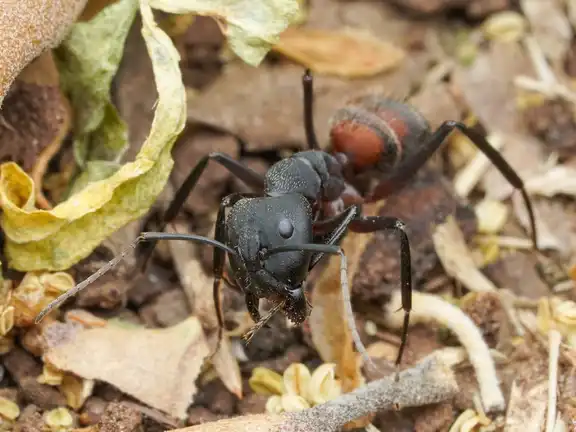
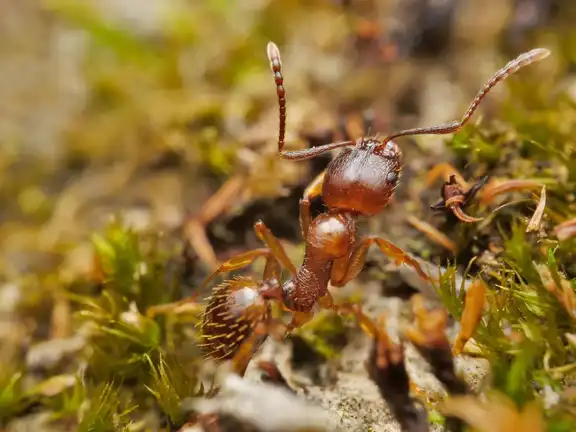
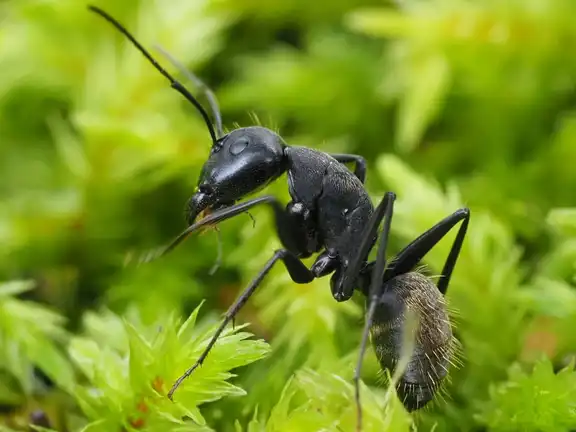
Plagiolepis pygmaea
(Latreille, 1798)
A pinhead-sized, sun-loving ant that lives in networks of many-queened nests and slips through the smallest gap.
Compiled from published sources and keeper reports: I haven't kept this species myself, so treat the care values as starting points.
At a glance
- Nest temperature
- 21–28 °CIn the nest
- Nest humidity
- ≈ 50–60 %In the nest
- Hibernation
- ≈ 10–15 °CNov – Feb · recommended
- Nuptial flights
- ≈ Jun – Aug
- Workers
- 1.3–2 mmAll the same size
- Queen
- ≈ 3–4.5 mmSeveral queens
- Colony size
- ≈ Reaches 5,000 workersGrowth: Moderate
- Escape risk
- HighEscape artists: use a closed outworld and a good barrier
Year at a glance
Hibernation : Nov – Feb
Active season : Mar – Oct
Nuptial flights : Jun – Aug
Months for temperate Europe and the Mediterranean. The weather decides the exact days, so flights can come earlier or later where you live.
How to recognize it
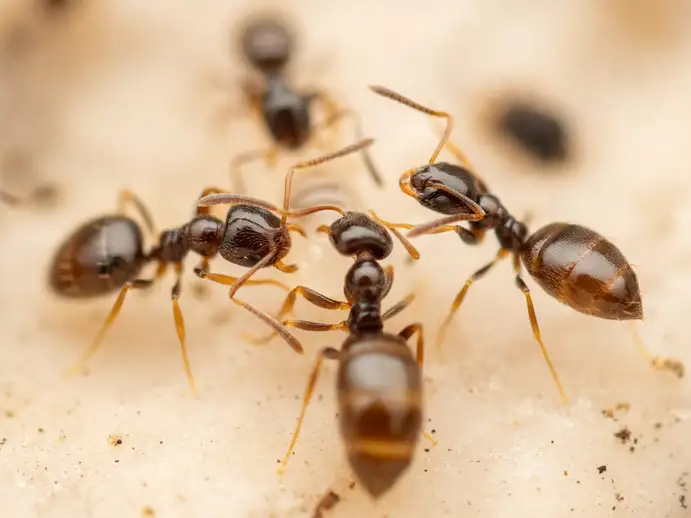
Minute, shiny brown to blackish workers, often with paler yellowish legs and antennae, so small they look like moving specks, and with abdomens that swell round when they are full of liquid food. Several very similar Plagiolepis species exist, so a sure identification needs a microscope: the differences are tiny details such as the proportions of the antennal segments.
Often confused with
- Plagiolepis schmitzii
- Plagiolepis pyrenaica
- Solenopsis fugax
- Workers1.3–2 mm
- Queen3–4.5 mm
mm
Biology
- Queens
- Several queensColonies live with several queens, which helps them grow faster.In the glossary
- Colony founding
- Fully claustralThe queen raises her first workers without eating, living off her wing muscles and fat reserves.In the glossary
- Workers
- All the same sizeAll the workers have about the same size and shape.
- Defense
- Bites · Sprays formic acidNo sting: the workers bite and spray formic acid, which can sting small cuts.
Native range
- Europe
- Middle East
Bulgaria, Croatia, France, Germany, Greece, Italy, Portugal, Slovenia, Spain, Switzerland, Türkiye
Taxonomy
Formicinae › Plagiolepidini
Plagiolepis
Care at a glance
Difficulty
Why this rating
- Makes it easier: Fully claustral: the queen needs no food until her first workers arrive
- Makes it harder: A real escape artist that needs an escape-proof setup
Food
- Sugar
- Insects
Sugar or honey water for the workers, and insects as protein for the queen and the brood.
Best nests
Notes from keepers
Tip
Offer sugar as a smear of crystallized honey or on a tiny scrap of foil, and keep any cotton only lightly moist: a single drop or a soggy plug can trap or drown several workers at once.
Watch out
Plan the escape barrier before the first workers hatch, and watch every joint: workers crowd into the thin gap between a test tube and its plug or a connecting tube, and Italian keepers lost many there, either crushed when the plastic expanded again after the winter rest or killed by accident when the plug was opened.
Tip
Copy their natural habitat of sun-warmed, dry ground with stones. Give the nest a warm side and a drier zone next to the damp brood chambers, and let the colony choose where to put the brood.
Watch out
Offer tiny dead prey such as fruit flies or pieces of mosquito, because Italian keepers advise against live insects for ants this small (springtails are the exception), and remove leftovers before they grow mold. Sugar is the staple and laboratory colonies have even lived for years on honey alone, but small protein portions at regular intervals feed a fast-growing brood.
Related posts
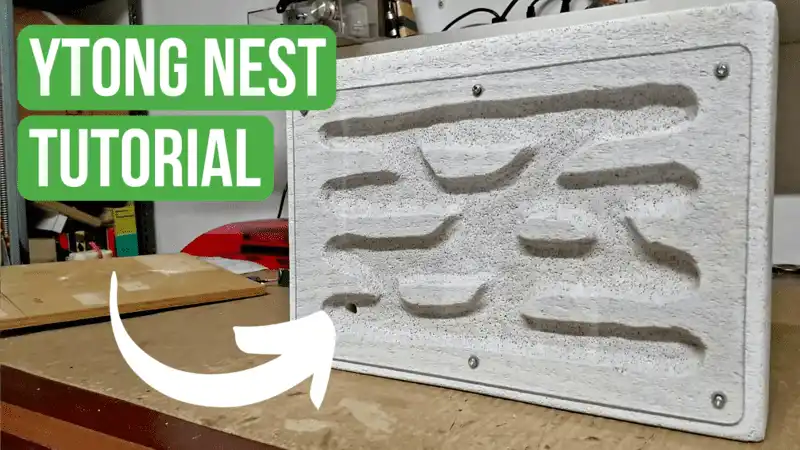
How To Make a Ytong Nest - Ant Keeping Tutorial
In this tutorial, you will learn how to make a Ytong nest for your ant colonies! This is one of the best nest types for many ant species!

How To Hibernate Your Ants - Hibernation Tutorial
In this guide, we’re going to talk about hibernation: What is it? Why do ants need hibernation? Should I hibernate my ants? Let's see!
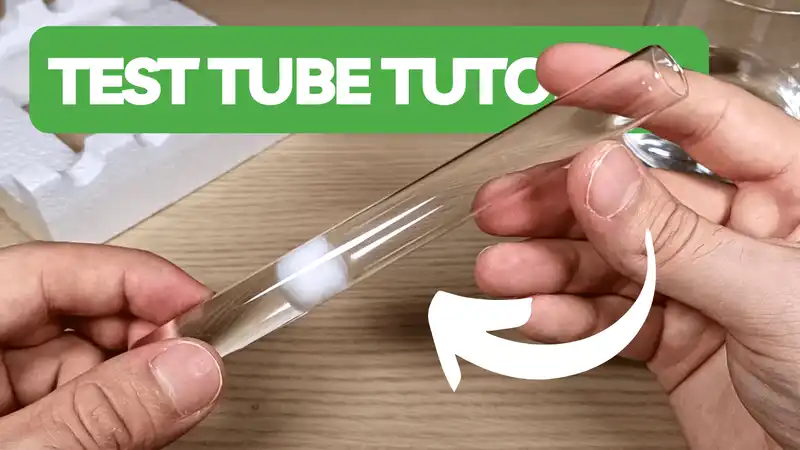
How To Make a Test Tube Setup - Ant Keeping Basics
In this tutorial you will learn how to make a test tube setup, the best way to create the optimal environment for a newly mated queen ant!
FAQs
10Yes. In nature colonies mostly spread by budding, when new queens and workers settle in a nearby nest, but keepers report that single queens or small groups raise their first workers in a test tube without being fed. Groups seem to do better: one Italian keeper had about thirty workers from three queens by the end of July, while single queens had only three or four. Groups can also thin out, though, since in two reports a group of queens ended up with just one.
A colony is spread over several nests that swap workers, brood and queens, which is called polydomy. In a French field study the colonies split into many nests close together in spring and merged again in late summer for the winter. Most nests held only workers, while the queens were clustered in a few of them.
Better not. In a study of a natural population in southern France, workers from different nests of the same colony never fought, but they were always hostile to workers of other colonies, however close or related those were. The workers also drive off unrelated males, so keep colonies collected at different places apart.
Plagiolepis pygmaea workers measure 1.3–2 mm, and the queen measures 3–4.5 mm.
Several. Plagiolepis pygmaea is polygyne: colonies live with more than one queen, which helps them grow faster.
No. Plagiolepis pygmaea has no sting: the workers bite and spray formic acid, which can sting small cuts.
In temperate Europe and the Mediterranean, Plagiolepis pygmaea usually flies in Jun – Aug. The weather decides the exact days.
Keep the Plagiolepis pygmaea nest at 21–28 °C, with 50–60 % humidity in the brood chambers.
Not strictly, but it helps. A cooler winter rest at 10–15 °C, roughly during Nov – Feb, keeps Plagiolepis pygmaea colonies healthy.
Plagiolepis pygmaea is not on the EU list of invasive alien species and is not protected in the countries we checked. Rules differ between countries and can change, so check your local laws first.
Sources and review
- 1
- 2
- 3
- 4
- 5
Showing 5 of 32 sources
Last reviewed
- BiologyWell documented
- Care valuesKeeper consensus
- Nuptial flightsFew sources
Legal status
Not on the EU list of invasive alien species and not protected in the countries we checked. Rules differ between countries and can change, so check your local laws before buying or collecting a queen.
Checked on October 11, 2026
All values are starting points: watch your colony and adjust. Found something wrong or missing?
Suggest a correction