Tetramorium caespitum
(Linnaeus, 1758)
Pavement ant
Tiny, tough and fast-growing, as long as your nest is escape-proof.
Based on my own colonies and checked against AntWiki, AntWeb and published sources.
At a glance
- Nest temperature
- 21–27 °CIn the nest
- Nest humidity
- 50–60 %In the nest
- Hibernation
- 5–8 °COct – Mar
- Nuptial flights
- Jun – AugMorning flights
- Workers
- 2–4 mmAll the same size
- Queen
- 6–8 mmOne queen
- Colony size
- No data yetGrowth: Fast
- Escape risk
- HighEscape artists: use a closed outworld and a good barrier
Year at a glance
Hibernation : Oct – Mar
Active season : Apr – Sep
Nuptial flights : Jun – Aug
- Morning flights
Months for temperate Europe and the Mediterranean. The weather decides the exact days, so flights can come earlier or later where you live.
How to recognize it
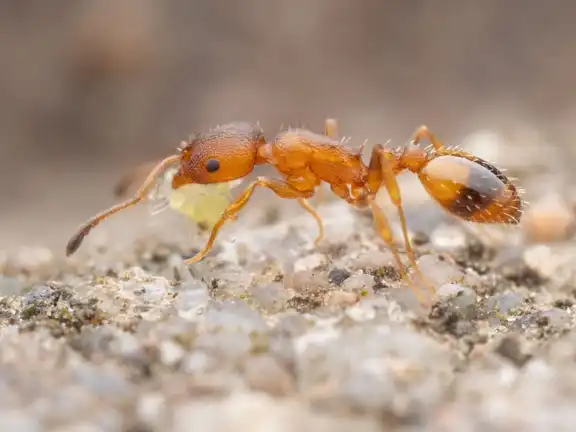
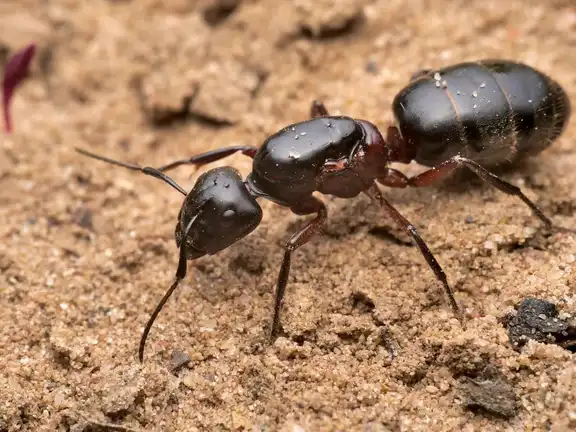
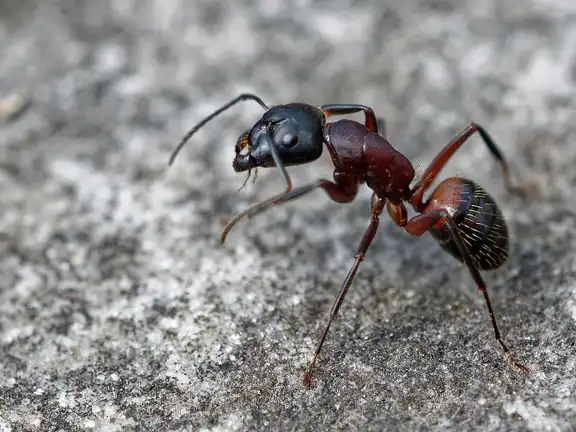
Tiny dark brown to blackish workers with fine ridges on the head and thorax, a smooth shiny gaster and a waist made of two small segments. A pair of short spines sticks out at the back of the thorax.
Often confused with
- Tetramorium immigrans
- Tetramorium impurum
- Workers2–4 mm
- Queen6–8 mm
mm
Biology
- Queens
- One queenEach colony has a single queen: never put two queens together once the first workers arrive.In the glossary
- Colony founding
- Fully claustralThe queen raises her first workers without eating, living off her wing muscles and fat reserves.In the glossary
- Workers
- All the same sizeAll the workers have about the same size and shape.
- Defense
- Bites · StingsThe workers can sting. It is usually mild for people, but avoid handling them.
Native range
- Europe
Austria, France, Germany, Hungary, Italy, Poland, Portugal, Spain, Switzerland, United Kingdom
Taxonomy
Myrmicinae › Crematogastrini
Tetramorium
Care at a glance
Difficulty
Why this rating
- Makes it easier: Fully claustral: the queen needs no food until her first workers arrive
- Makes it harder: A real escape artist that needs an escape-proof setup
- Makes it harder: Needs a cold hibernation, for example in a fridge
- Makes it harder: The workers can sting
Food
- Sugar
- Insects
Sugar or honey water for the workers, and insects as protein for the queen and the brood.
Best nests
- 1Acrylic nest
- 2Test tube setup
- 3Naturalistic setup
From my colonies
Watch out
These ants are masters at finding gaps, so pick an acrylic or test tube-based nest whose layers fit tightly together, and check every join of a naturalistic enclosure.
Tip
Give this fast grower plenty of protein: once the first workers are out, regular insects feed the queen and the brood.
Tip
Growth looks slow at first, then takes off once the colony reaches a certain worker count, so have a bigger nest ready before that happens.
Watch out
Several sibling species look almost identical, so the name on a queen you caught or bought is only a good guess: telling them apart takes a microscope and detailed measurements.
Care guide and related posts
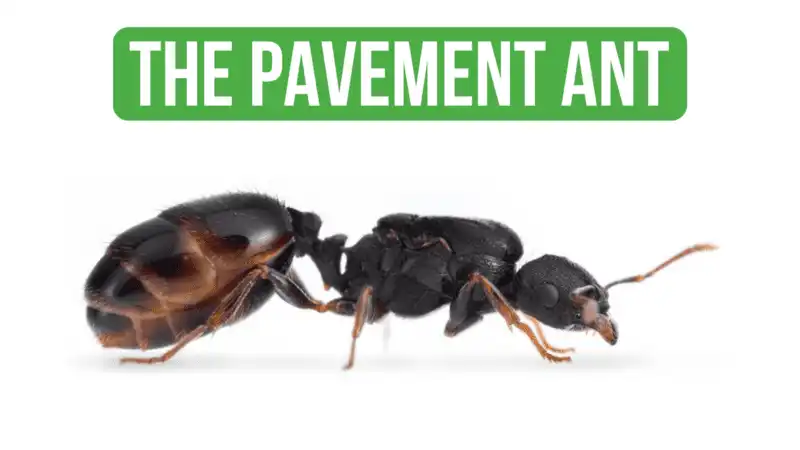
How To Care for Tetramorium caespitum
In this guide you will learn how to care for Tetramorium caespitum! Temperature, humidity, food, hibernation, nest type... and much more!
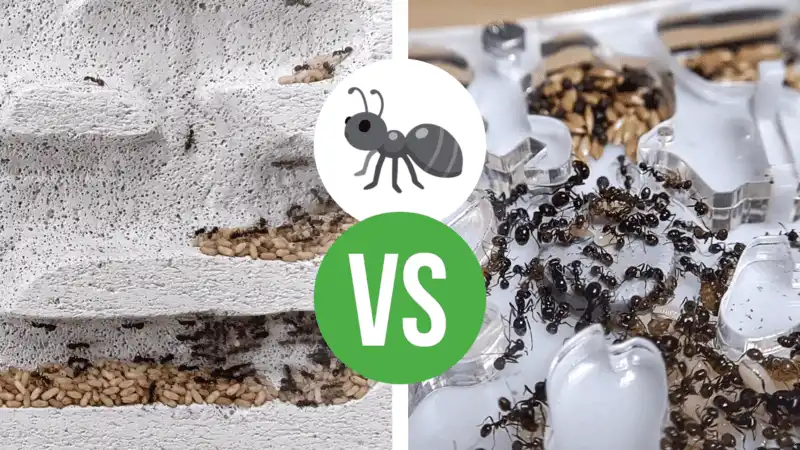
Ytong vs Acrylic - Which Is Better For An Ant Nest?
In this article, we’re going to talk about two of the most popular types of ant nests: acrylic nests and Ytong nests! Let's compare them!

How To Hibernate Your Ants - Hibernation Tutorial
In this guide, we’re going to talk about hibernation: What is it? Why do ants need hibernation? Should I hibernate my ants? Let's see!
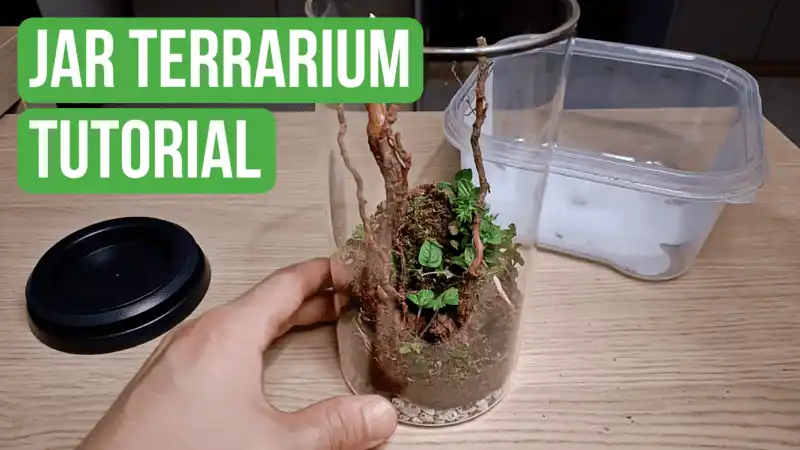
How To Make a Jar Terrarium
In this short guide, you're going to learn how to build a very simple jar terrarium, a really cool decoration for your room!
FAQs
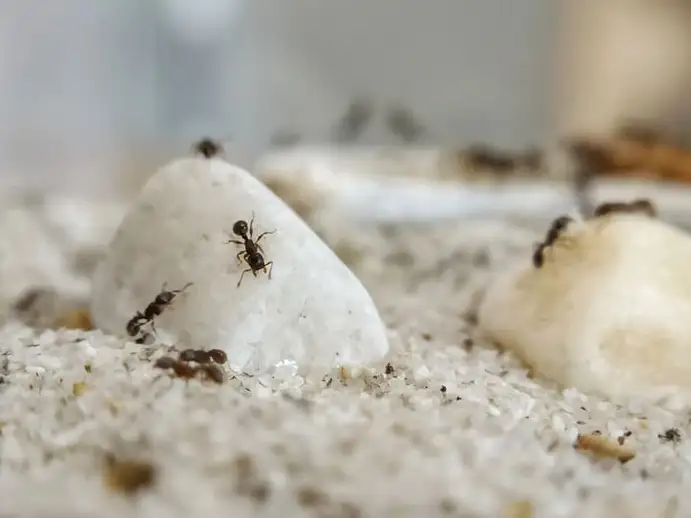
7In the wild they tend to nest under sidewalks, stones and pavement, and in the crevices of housing structures. That habit gave them their common name.
No. Tetramorium caespitum is native to Europe. The pavement ants that ships brought to North America from the 1700s onwards look almost identical, but in 2017 scientists showed that they are a separate sibling species, Tetramorium immigrans.
Tetramorium caespitum workers measure 2–4 mm, and the queen measures 6–8 mm.
Just one. Tetramorium caespitum is monogyne: each colony has a single queen, so never put two queens together once the first workers arrive.
Yes. Tetramorium caespitum workers can sting. It is usually mild for people, but it's best to avoid handling them.
In temperate Europe and the Mediterranean, Tetramorium caespitum usually flies in Jun – Aug. The weather decides the exact days.
Tetramorium caespitum is not on the EU list of invasive alien species and is not protected in the countries we checked. Rules differ between countries and can change, so check your local laws first.
Sources and review
Bruma's own colonies
Care
- 1AntWiki: Tetramorium caespitum
Reference · Taxonomy, Biology, Distribution
- 2AntWeb: Tetramorium caespitum
Reference · Taxonomy, Biology
- 3Wagner et al. (2017), Myrmecological News: Light at the end of the tunnel, integrative taxonomy delimits cryptic species in the Tetramorium caespitum complex
Paper · Taxonomy, Biology, Distribution, Nuptial flights
- 4Animal Diversity Web: Tetramorium immigrans
Reference · Taxonomy
- 5EU list of invasive alien species of Union concern (Implementing Regulation 2016/1141, consolidated)
Reference · Legal status
Last reviewed
- BiologyWell documented
- Care valuesWell documented
- Nuptial flightsKeeper consensus
Legal status
Not on the EU list of invasive alien species and not protected in the countries we checked. Rules differ between countries and can change, so check your local laws before buying or collecting a queen.
Checked on October 10, 2026
All values are starting points: watch your colony and adjust. Found something wrong or missing?
Suggest a correction